
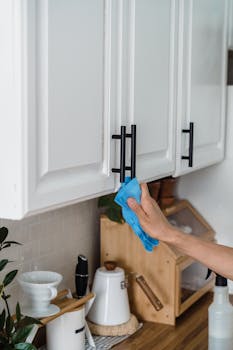
How to Remove Grease From Cabinets Without Damaging the Finish
Grease Buildup Happens Slowly — Until It Doesn’t
Cabinets can look clean from a distance.
Then light hits the surface and reveals the problem:
Sticky film near the stove
Darkened edges around hardware
Dust bonded to oily residue
Learning how to remove grease from cabinets properly matters. The biggest issue isn’t grease itself — it’s the damage caused by overly aggressive cleaning.
Harsh degreasers, abrasive pads, and oversaturation are what strip finishes, dull paint, and swell wood.
The goal is effective removal without surface damage.
Why Grease Builds Up on Cabinets
When cooking oils heat, microscopic droplets become airborne. Those droplets:
Settle on nearby surfaces
Combine with dust
Harden over time
Cabinets closest to the stove collect buildup fastest. However, upper cabinets and even trim areas can develop residue — especially in kitchens with limited ventilation.
Grease buildup is gradual, which makes it easy to overlook until it becomes stubb
Start With the Safest Method: Dish Soap and Warm Water
This is the professional baseline for most situations.
How to Remove Grease From Cabinets Using Dish Soap
Mix a few drops of mild dish soap into warm water.
Dip a microfiber cloth or non-abrasive sponge into the solution.
Wring it out so it is damp — not dripping.
Wipe from top to bottom using even strokes.
Rinse with a clean damp cloth.
Dry immediately with a towel.
Why This Works
Dish soap contains surfactants designed to break down oil molecules. It dissolves grease without attacking sealed finishes.
This method is safe for:
Painted cabinets
Sealed wood
Laminate
Metal cabinetry
Important: Standing moisture causes more damage than mild soap. Always dry surfaces thoroughly.
For Heavier Buildup: Vinegar Used Correctly
If grease remains after using soap, diluted white vinegar can help.
Safe Vinegar Method
Mix equal parts white vinegar and warm water
Apply to a cloth (do not spray directly on cabinets)
Wipe gently
Rinse with clean water
Dry immediately
Vinegar contains mild acetic acid that helps break down heavier residue.
Surface Considerations
Use caution on finished wood. Short exposure is typically safe, but prolonged contact may dull sheen. Avoid soaking the surface.
Spot Treatment for Stubborn Grease: Baking Soda
Baking soda adds mild abrasion and should be used selectively.
How to Use Safely
Mix baking soda with water to create a paste
Apply only to stubborn spots
Let sit for 5–10 minutes
Gently rub with a soft cloth or toothbrush
Wipe clean and dry thoroughly
Use minimal pressure. Aggressive scrubbing can dull protective coatings.
Professional Techniques That Improve Results
These methods are used in both residential and professional cleaning environments.
Gentle Heat
Light heat from a hair dryer can soften thick grease before wiping. Warm grease releases more easily.
Avoid steam cleaners on laminate or thermofoil cabinets, as excess heat and moisture may cause warping.
Focus on Hardware and Edges
Grease accumulates around:
Handles
Recessed molding
Corners and trim
A soft toothbrush dipped in cleaning solution can loosen buildup in detailed areas. Follow with a damp cloth and dry thoroughly.
What to Avoid When Removing Grease From Cabinets
Most cabinet damage occurs during cleaning attempts.
Avoid:
Steel wool
Abrasive scrub pads
Magic Erasers
Harsh solvent degreasers
Oversaturating wood surfaces
Abrasives scratch finishes. Strong solvents can strip coatings. Excess water leads to swelling or peeling.
Technique matters more than chemical strength.
Prevent Future Grease Buildup
Consistent light maintenance prevents heavy restoration.
Wipe cabinets weekly with a damp microfiber cloth
Use kitchen ventilation during cooking
Address small grease spots early
Pay attention to high-splash areas
Routine care reduces deep-cleaning intensity.
For Cleaning Professionals: Reduce Risk and Liability
If cleaning for clients:
Always test products in an inconspicuous area
Confirm cabinet finish type before using acidic solutions
Document pre-existing damage
Avoid experimental or unverified products
Using mild methods first protects both the surface and your reputation.
Final Takeaway
To remove grease from cabinets safely:
Start with warm water and dish soap
Use diluted vinegar carefully for heavier residue
Apply baking soda only as a targeted spot treatment
Avoid abrasives and harsh solvents
Dry surfaces thoroughly
Effective grease removal relies on controlled technique — not force.
If you’re in North Chicago, Here 2 Clean provides detail-focused kitchen cleaning that restores cabinets while protecting their finish.
Disclaimer
Always test cleaning solutions in an inconspicuous area first.
Avoid oversaturating wood cabinets.
Follow manufacturer care instructions for specialty finishes.
Check out our other handy guides:
-3 Surfaces You Should Never Clean with Bleach
-Best Grime Removers Ranked: From Kitchen Grease to Garage Floors