
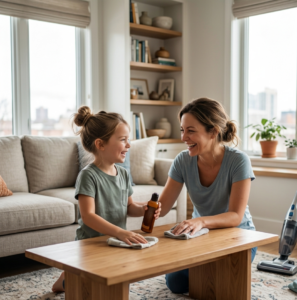
Cleaning Habits for Kids: How to Build Routines That Actually Stick
Getting kids to help clean once is easy.
Getting them to do it consistently—without constant reminders—is where most families struggle.
The issue isn’t motivation. It’s structure.
Kids don’t naturally think long-term. They don’t clean because it “matters.” They respond to:
- Clear expectations
- Simple systems
- Consistency
When those are missing, cleaning becomes a daily argument instead of a habit.
This guide shows how to build cleaning habits for kids that actually stick.
Why Most Cleaning With Kids Plans Fail
Many parents rely on vague requests like:
- “Can you clean your room?”
- “Help me out for a minute”
The problem is that these instructions are unclear and inconsistent.
Without structure, kids don’t know:
- What “clean” means
- When to do it
- How often it matters
Habits don’t form from reminders. They form from systems.
Step 1: Start With Systems, Not Motivation
Motivation is unreliable. Systems are not.
Instead of asking for help randomly, create predictable routines.
Examples of Simple Systems
- After school → 5-minute reset
- Before dinner → clear common areas
- Before bed → quick room check
These routines remove decision-making. Cleaning becomes automatic.
Pro Tip: The more predictable the routine, the less resistance you’ll get.
Step 2: Keep Tasks Small and Repeatable
Large tasks overwhelm kids. Small tasks build consistency.
Better Approach
- Wipe one surface
- Pick up five items
- Make the bed (even imperfectly)
This creates:
- Quick wins
- Less resistance
- Higher follow-through
Consistency beats perfection every time.
Step 3: Use Zones Instead of Random Chores
Random chores create confusion. Zones create ownership.
Example System
- One child → living room
- One child → bathroom sink area
- One child → their bedroom
Why This Works
- Clear responsibility
- Less arguing
- Easier accountability
Kids are no longer “helping.” They’re responsible for their space.
Step 4: Remove Friction (This Is Critical)
If cleaning feels difficult, kids won’t do it.
Set up the environment to make cleaning easy.
Practical Adjustments
- Keep supplies within reach
- Use lightweight tools
- Store items where they are used
Example:
If wipes are hidden under a sink in another room, they won’t get used.
If they are visible and easy to grab, they will.
Small changes in setup create big changes in behavior.
Step 5: Expect Imperfect Results at First
This is where most systems fail.
Kids will not:
- Fold perfectly
- Clean thoroughly
- Do things your way
That’s normal.
If you redo everything, two things happen:
- They lose confidence
- They stop trying
Focus on effort first. Improve quality over time.
Step 6: Build a Weekly Reset Routine
Daily cleaning keeps things manageable. Weekly resets prevent buildup.
Simple Weekly Structure
- Pick one day (Saturday morning works well)
- Set aside 30–60 minutes
- Assign clear roles
Example Tasks
- Floors
- Bathrooms
- Trash
- Laundry reset
This builds:
- Structure
- Predictability
- Shared responsibility
Step 7: Use Rewards Carefully
Rewards can help—but they shouldn’t be the system.
If kids only clean for rewards, the habit won’t last.
Better Approach
- Use occasional rewards (movie night, extra screen time)
- Give specific verbal recognition
Example:
“You handled your room without being asked. That’s solid.”
The goal is to build identity—not dependency on rewards.
Step 8: Make Cleaning Part of Normal Life
The goal isn’t to make cleaning exciting.
The goal is to make it normal.
Kids should grow up thinking:
- “This is just what we do”
- “Everyone contributes”
That mindset is what carries into adulthood.

Common Mistakes That Break Cleaning Habits
Avoid these common problems:
- Doing everything yourself (fast, but short-term thinking)
- Giving tasks that are too large
- Being inconsistent with routines
- Expecting adult-level results too early
- Using cleaning as punishment
These mistakes prevent habits from forming.
Final Takeaway
Teaching kids to clean isn’t about having a perfect home.
It’s about building:
- Responsibility
- Structure
- Life skills
The real win isn’t a spotless house.
It’s raising kids who know how to take care of one.
Disclaimer
This content is based on general best practices and independent research on child development and household routines. Always supervise children when using cleaning tools or products. Adapt routines based on your child’s age and ability level.
Check out our other handy guides:
-Cleaning with Kids: Tips to Make It Fun, Safe, and Effective
-5 Best Eco-Friendly Cleaners That Actually Work